PLN Nusantara Power Revitalizes Maron River, Protects Nature and Strengthens the Local Economy
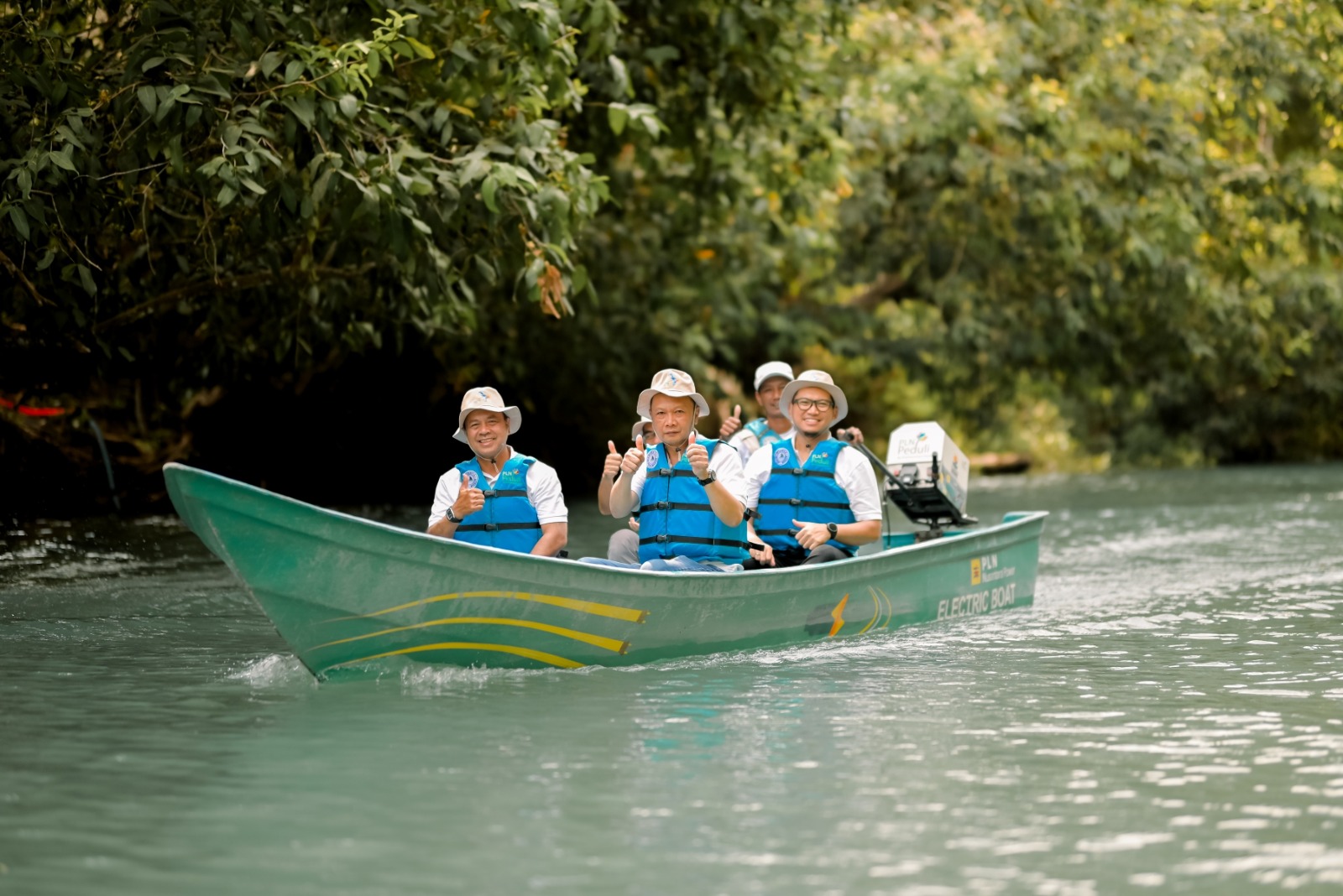
Pacitan, September 30, 2026 — Clear water, lush vegetation, and dramatic karst cliffs have made the Maron River in Pacitan one of the region’s most attractive natural tourism destinations. For local communities, however, the river is more than just a scenic landscape. It is a source of livelihood that must be protected together.
This spirit has shaped PLN Nusantara Power’s (PLN NP) journey with the Maron community since 2023. Through the “From Energy for the River” program held on Wednesday, September 30, PLN NP once again strengthened its commitment to river ecosystem conservation, biodiversity protection, and community empowerment as part of the implementation of Environmental, Social, and Governance (ESG) principles.
President Director of PLN Nusantara Power, Ruly Firmansyah, said PLN NP’s presence at the Maron River was designed from the outset not merely to build facilities, but to strengthen the community’s capacity to independently manage its local potential.
“When PLN Nusantara Power began developing the Maron River area in 2023, we did not want to simply build facilities and then leave. We wanted to build something more fundamental: the capacity of the community to manage the potential they have on their own,” Ruly said.
Over four years, the program has undergone an increasingly broad transformation. It began with strengthening local institutions and the Tourism Awareness Group (Pokdarwis), improving tourism safety, training 93 boat operators, and developing micro, small, and medium enterprises (MSMEs), before expanding into environmental management, clean energy, and the circular economy.
In 2025, through the SUMANTRI BERSERI phase — Sungai Maron Lestari, Bersih, dan Berdikari — PLN NP supported the deployment of 10 CAKRA Electric Boats, a solar-powered electric vehicle charging station, a flood Early Warning System (EWS), a reduce-reuse-recycle waste processing facility (TPS3R), riverbank conservation, and the utilization of fly ash and bottom ash (FABA) for tourism infrastructure.
The use of FABA from the Pacitan Steam Power Plant is one example of how sustainability can be applied in tangible ways. The material has been used to support the construction of various facilities in the Maron River tourism area, including paving blocks, entrance gates, and other supporting infrastructure. The Pacitan Regency Government has also recorded PLN NP’s support in the form of FABA paving blocks, FABA-based terracotta products, TPS3R facilities, an EWS, boat speed zoning signs, and lifeguard facilities.
Entering 2026, through SUMANTRI BERANI — Sungai Maron Lestari, Berdaya, dan Adaptif — the program has placed an even stronger emphasis on sustainability. Coconut waste that previously had the potential to become an environmental problem is now processed into cocofiber, cocopeat, and coir logs. A total of 1,136 kilograms of coconut waste is processed each month, while the use of coir logs for erosion control has benefited 116 households.
“This is an example of shared value. When the environment improves, communities gain economic benefits. When the local economy grows, environmental awareness becomes stronger. And when communities become more empowered, the area becomes increasingly sustainable,” Ruly said.
As part of the From Energy for the River activity, held in conjunction with PLN NP’s 31st anniversary celebrations, the company and its stakeholders also carried out conservation efforts by planting 310 trees, installing 3,100 meters of coconut-fiber rope, planting 10,000 vetiver plants, and releasing 3,100 eel fingerlings. The activities also included river clean-up initiatives and environmental education.
Pacitan Regent Indrata Nur Bayuaji expressed his appreciation for PLN NP’s continued support for the Maron community since 2023. According to him, the development of the Maron River demonstrates that environmental conservation can go hand in hand with increasing economic benefits for local communities.
“Thank you to PLN Nusantara Power for supporting the Maron community since 2023. I have witnessed how this assistance has had a positive impact on the community. The Maron River is a blessing, and therefore it is our responsibility to preserve it,” Indrata said.
He added that the success of the Maron River management initiative has begun to attract interest from other regions seeking to develop similar concepts, including Yogyakarta.
“This shows that what has been done at the Maron River is creating an impact. Most importantly, tourism development must provide the greatest possible benefits for the community,” he said.
For Indrata, protecting the river cannot be separated from protecting vegetation and upstream areas.
“A river exists because there are trees and healthy vegetation. Let us continue to protect our forests to preserve the river. Hopefully, we will continue to receive blessings from what we do.”
Meanwhile, Director of Water Quality Protection and Management at the Ministry of Environment/Environmental Control Agency (KLH/BPLH), Tulus Laksono, emphasized that the development of Maron River tourism should be accompanied by regular water quality monitoring. He encouraged periodic measurements of the river’s water quality as an integral part of managing a water-based tourism destination. KLH/BPLH itself considers water quality monitoring an important component of river management.
“The Maron River has tremendous potential. Because it is used for water tourism activities, its water quality needs to be monitored regularly. This is important so that we understand the condition of the river and can immediately take improvement measures when necessary,” Tulus said.
According to Tulus, protecting the Maron River must also begin upstream. Vegetation and forest cover play an important role in maintaining the availability of river water throughout the year.
“If we want the river to continue flowing, we must protect its upstream areas. Planting trees upstream is not only about greening the environment, but also about maintaining the continuity of water and life along the river,” he said.
He also commended PLN NP for developing the Maron River not only as a tourism destination, but also as a platform for community empowerment and environmental conservation.
“What we hope is that when this program is eventually handed over to the community, its development does not stop. It should become even stronger. Community cohesion must continue to be maintained so that both the economic and environmental benefits can be sustained over the long term,” Tulus said.
This message is aligned with PLN NP’s direction in encouraging the Maron River community to transform from program beneficiaries into agents of change. In addition to Pokdarwis, MSMEs, waste management groups, boat operators, and women’s groups, PLN NP also involves children through the Maron River Green Generation program.
PLN NP hopes that the collaboration built with the Pacitan Regency Government, KLH/BPLH, local communities, Pokdarwis, MSMEs, and other community groups will continue after the formal assistance phase ends. In 2027, the Maron River program is expected to enter a self-reliance phase, enabling the community to independently and sustainably manage tourism, economic activities, and conservation efforts.(*)